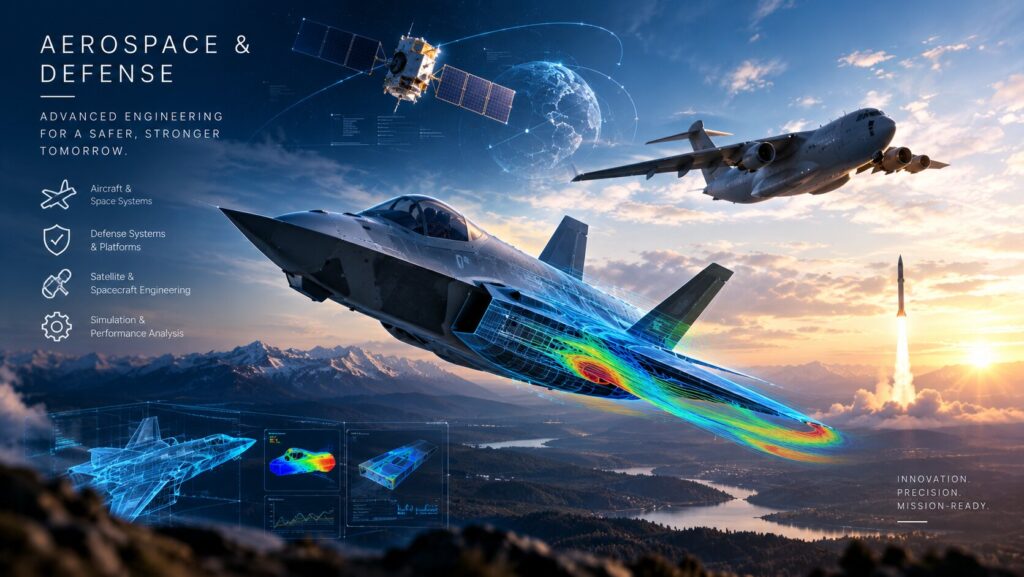
Aerospace & Defense Engineering Solutions
exceptional structural performance, weight efficiency, thermal control, and aerodynamic behavior
Explore Industry
Advanced fluid flow and heat transfer simulations to understand system behavior, optimize performance, improve thermal management, and solve complex engineering challenges before physical testing.
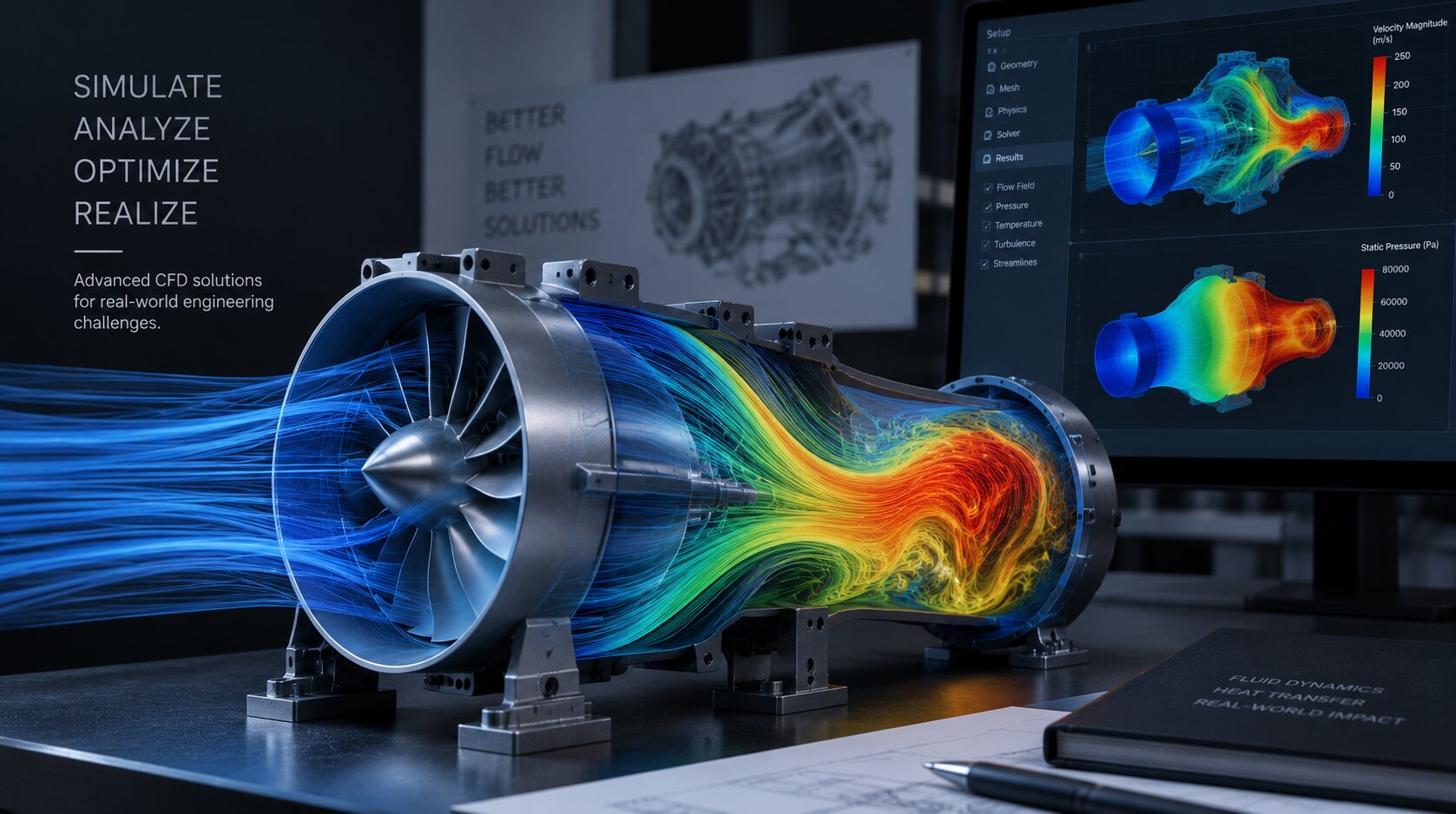
Computational Fluid Dynamics (CFD) uses numerical simulation to predict the behavior of fluids, gases, heat transfer, and their interaction with physical systems. It enables engineers to visualize flow patterns, pressure distributions, temperature fields, turbulence, and other phenomena that may be difficult or expensive to measure experimentally.
At Digiwise Innovations, CFD is used to investigate engineering performance, identify flow and thermal inefficiencies, compare design alternatives, and optimize systems before physical prototyping. Our simulations translate complex fluid behavior into practical engineering insights for better design decisions.
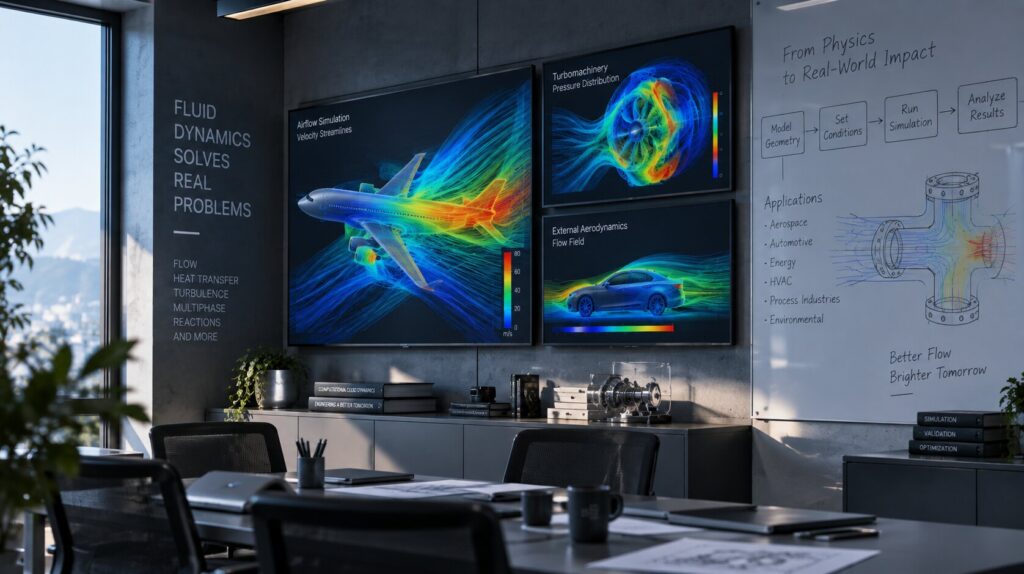
Explore the industries connected to this service through shared engineering expertise.
exceptional structural performance, weight efficiency, thermal control, and aerodynamic behavior
Explore Industry
Advanced engineering for reliable electronic systems.
Explore Industry
Reliable engineering solutions for demanding process industries.
Explore Industry
Simulation-driven design for implants and devices.
Explore Industry
Crash analysis and battery thermal management.
Explore Industry
Structural integrity and fatigue life analysis.
Explore IndustryPartner with Digiwise Innovations for accurate simulation, clear reporting, and practical engineering recommendations.
Yes. CFD is particularly useful when temperature behavior depends on fluid flow and convection, including electronics cooling, heat exchangers, battery systems, and thermal management.
Yes. For specialized applications, custom numerical models, boundary conditions, source terms, UDFs, and automated workflows can be developed.
Typical inputs include geometry, fluid properties, flow rates, pressure or velocity conditions, temperatures, heat sources, operating conditions, and relevant performance requirements.
CFD can analyze fluid flow, pressure drop, turbulence, heat transfer, cooling, aerodynamics, multiphase flow, fluid-structure interaction, and many other flow-related engineering problems.